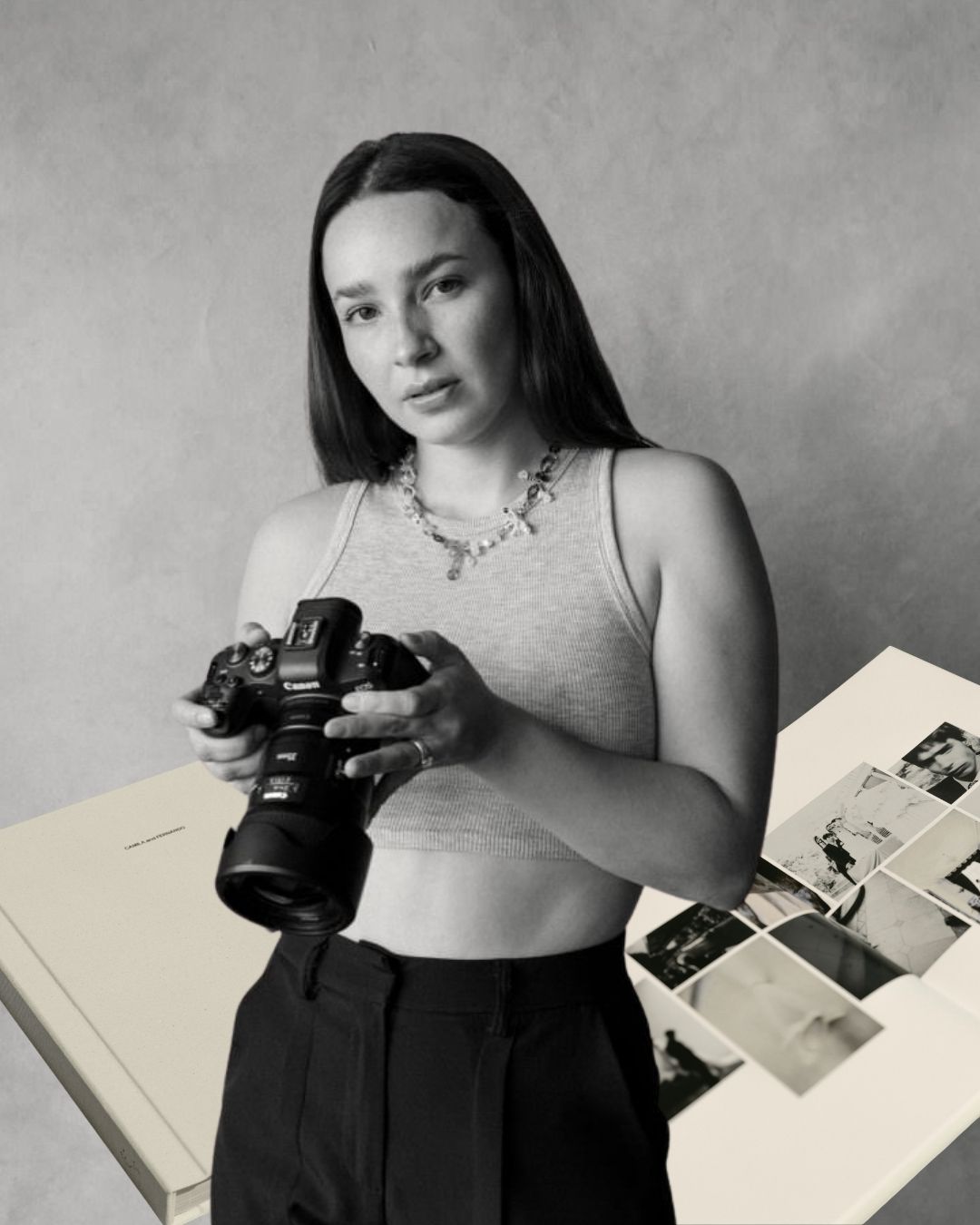
Camila Urrea is a Mexican-born, London-based wedding and portrait photographer whose work is defined by art, architecture, and emotional depth. She is also the founder of Rise by Creatives, an educational platform supporting Spanish-speaking photographers in building sustainable, intentional careers. We sat down with Camila to talk about identity, the state of the industry, the power of tangible work – and why clarity will always outlast trends.
01 JOURNEY & CREATIVE INFLUENCES
Looking back at your journey in photography, what moments or decisions shaped the way you see your work today?
I think the biggest shift for me happened when I stopped seeing photography as a service and started seeing it as a language. At the beginning, like most photographers, I was very focused on delivering what people expected – more photos, faster turnaround, pleasing everyone. But over time I realised that the work that truly stayed with me, and with my clients, wasn’t the most technically perfect image. It was the images that felt something.
Moving to London was also a huge turning point. Being surrounded by museums, architecture, fashion, and a different cultural rhythm really expanded how I saw storytelling. It made me understand that weddings are not just events – they’re living, breathing narratives, full of texture, emotion, and atmosphere. That’s when my mindset shifted from ‘how many photos can I deliver?’ to ‘how deeply can I see?’
“Weddings are not just events – they’re living, breathing narratives, full of texture, emotion, and atmosphere.”
Your work feels strongly influenced by art, fashion, and architecture. How do these disciplines inform the way you compose, edit, and tell stories?
For me, photography doesn’t live in isolation. Art taught me to observe light and emotion. Architecture taught me structure and balance. Fashion taught me movement, styling, and intention. When I compose an image, I’m often thinking like an architect – about lines, space, negative space, and how elements interact with each other. When I edit, I think more like a painter – about tone, colour harmony, atmosphere, and subtlety. And when I direct or guide couples, fashion influences come in the posture, the rhythm, the way fabrics move, the elegance of simplicity.
All of these disciplines help me move beyond documenting what’s happening and instead create images that feel timeless.
How did your visual identity evolve over time, and what helped you move away from imitation toward something more personal?
Honestly, imitation is a phase everyone goes through. At the beginning, I was heavily influenced by photographers I admired – and that’s natural, it’s how we learn. But over time I realised that trying to look like someone else actually creates anxiety. You’re constantly chasing something that isn’t yours. What really helped me move toward my own identity was slowing down and asking myself deeper questions: What kind of stories move me emotionally? What type of clients do I truly connect with? What environments inspire me? And also accepting that identity isn’t built overnight. It’s built through years of observing, refining, and being honest with yourself.
Was there a moment when you realised that photography, for you, was about more than delivering images?
Yes. It happened when a client told me that looking at their gallery made them relive their wedding day in a way they didn’t expect. They said it felt like ‘stepping back into a memory.’ That’s when it really clicked for me. We’re not just delivering files – we’re preserving experiences, emotions, relationships, and moments that will never exist again. From that point on, my work became much more intentional. It became about presence, empathy, and storytelling – not just documentation.
“We’re not just delivering files. We’re preserving moments that will never exist again.”
02 A GLOBAL VIEW OF THE PHOTOGRAPHY INDUSTRY
As a photographer working worldwide, how would you describe the current state of the industry?
Globally, the industry is growing fast, but it’s also becoming more saturated and more fast-paced. In many markets, there’s an emphasis on volume, speed, and constant visibility – especially driven by social media. But at the same time, there’s also a rising demand for deeper experiences, more intentional storytelling, and personalised service, especially in the premium and luxury markets. So we’re living in this interesting contrast: more noise than ever, but also more opportunity for those who focus on clarity and intention.
Are there differences in how clients perceive the value of photography depending on the region?
In some markets, photography is still perceived mainly as a service – something functional. In others, especially in more premium and luxury markets, photography is seen as an experience and a legacy product. Where value is clearly understood, clients are not only paying for images – they’re paying for trust, guidance, artistic vision, and emotional storytelling.
From your perspective, what is missing most in the industry right now?
Clarity and intention. There’s so much focus on trends, algorithms, and visibility, but not enough focus on identity, storytelling depth, and long-term vision. Many photographers are busy, but not necessarily fulfilled or sustainable in their careers.

03 THE REAL CHALLENGES PHOTOGRAPHERS FACE TODAY
Many photographers struggle with overproduction and burnout. Why do you think this has become so common?
Because the industry has normalised the idea that ‘more is better.’ More photos, more posts, more reels, more clients. But creativity doesn’t thrive in constant production mode – it needs space, reflection, and intention. When photographers operate purely in output mode, burnout becomes inevitable.
How does a lack of clear identity affect both creativity and pricing?
When you don’t have a clear identity, everything becomes harder. Creatively, you feel lost because you don’t know what you’re trying to say. From a business perspective, pricing becomes unstable because clients can’t clearly understand your value. Clarity in identity creates confidence – both internally and externally.
What is the biggest mindset shift photographers need to make to build a more sustainable career?
Moving from ‘how can I get more clients?’ to ‘how can I build deeper value?’ Sustainability comes from clarity, intention, and quality – not just volume.
“Trends feel safe. But they disconnect photographers from their own voice.”
04 WHY COPYING TRENDS CREATES CONFUSION
Why do you think so many photographers feel the need to follow trends so closely?
Because trends feel safe. They give the illusion of certainty – if something is popular, it feels like the right thing to do. But the downside is that it disconnects photographers from their own voice.
What happens to a photographer’s work and business when everything starts to look the same?
Clients become confused. When portfolios look identical, it’s very difficult for them to understand what makes one photographer different from another. And that often leads to decisions being made based on price instead of value.
What advice would you give to photographers who are afraid to step away from what’s popular?
Trust that your uniqueness is your biggest strength. Trends fade. Identity lasts.
05 INTENTION OVER VOLUME
What does working with intention mean to you in practice?
It means being selective, thoughtful, and present. It’s about making conscious decisions in how you shoot, edit, communicate, and deliver.
Why do you believe standing out today is more about clarity than visibility?
Visibility without clarity creates noise. Clarity allows clients to immediately understand your value.
How can photographers simplify their process without losing impact?
By focusing on what truly matters: connection, storytelling, and intention.
06 CREATING TANGIBLE VALUE: ALBUMS, BRANDING & LEGACY
Why do you believe tangible work still plays an important role in a digital-heavy world?
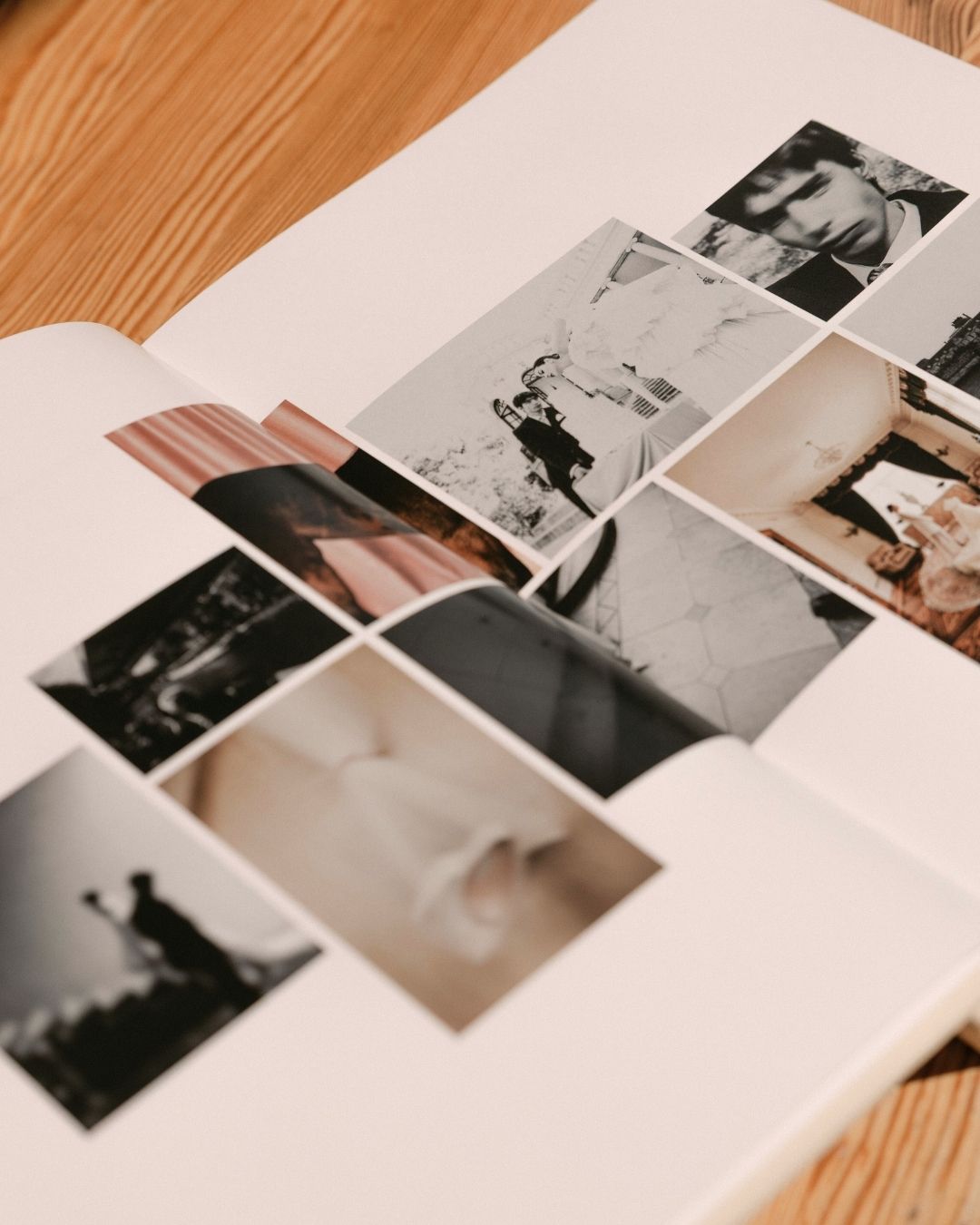
In a world where everything lives on screens, tangible pieces bring something that digital simply cannot: permanence and emotional presence. From my own experience – both as a photographer and as a bride – I’ve seen a huge difference between scrolling through images on a phone and holding them in your hands. When photos exist only digitally, they often become part of the endless flow of content. We scroll quickly, we consume quickly, and sometimes we don’t truly pause to feel.
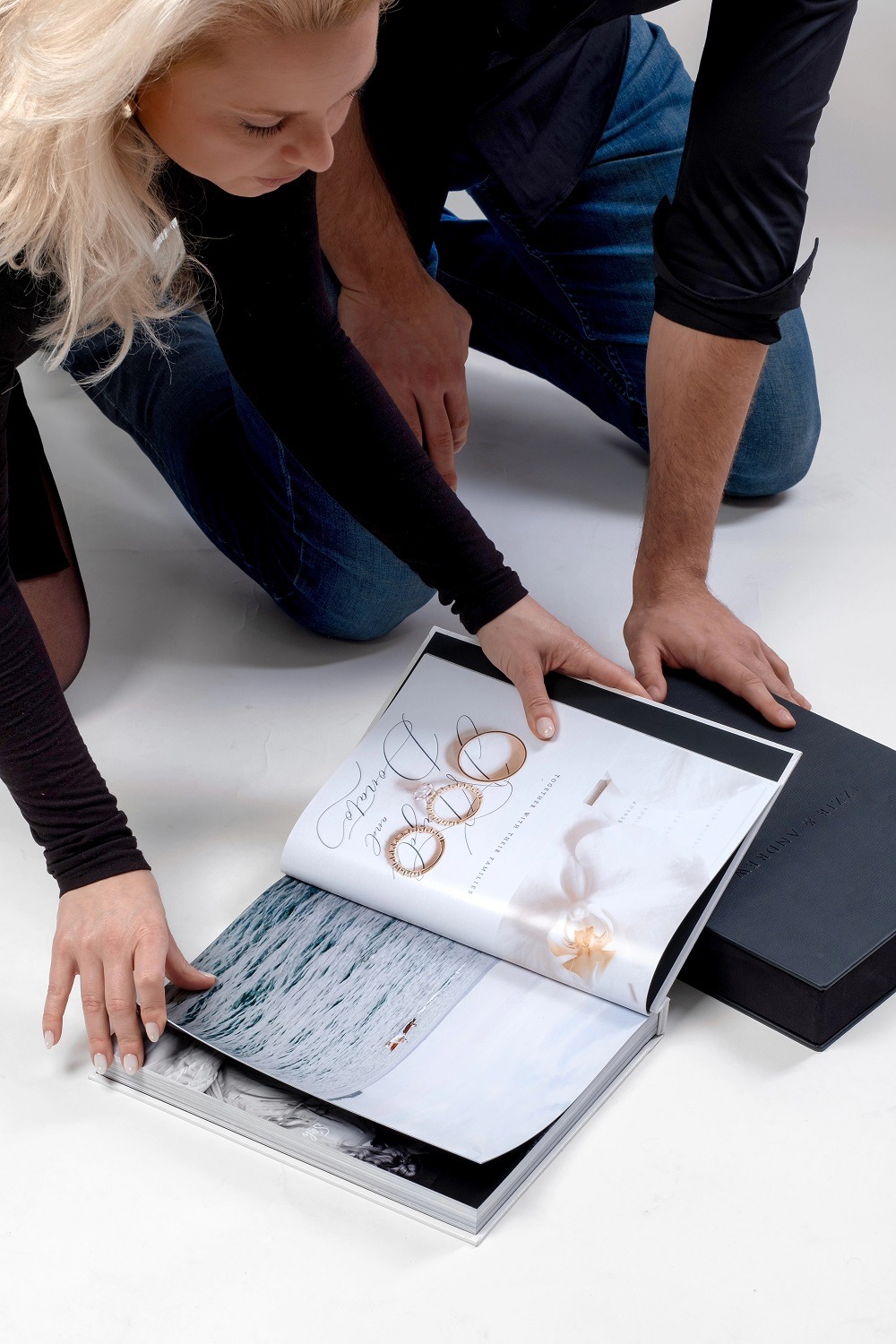
But when images are printed – especially in an album- everything changes. You slow down, you sit with the memory, you relive the experience in a much deeper way. There’s something very emotional about turning pages, about physically touching a moment that once existed. It transforms photography from something temporary into something lasting – something that becomes part of a family’s history. For me, tangible work turns photography into legacy.
“An album is not just a collection of images — it’s a narrative. It’s selecting the moments that truly represent the essence of the day.”
How can thoughtfully crafted deliverables elevate both the client experience and the perceived value of photography?
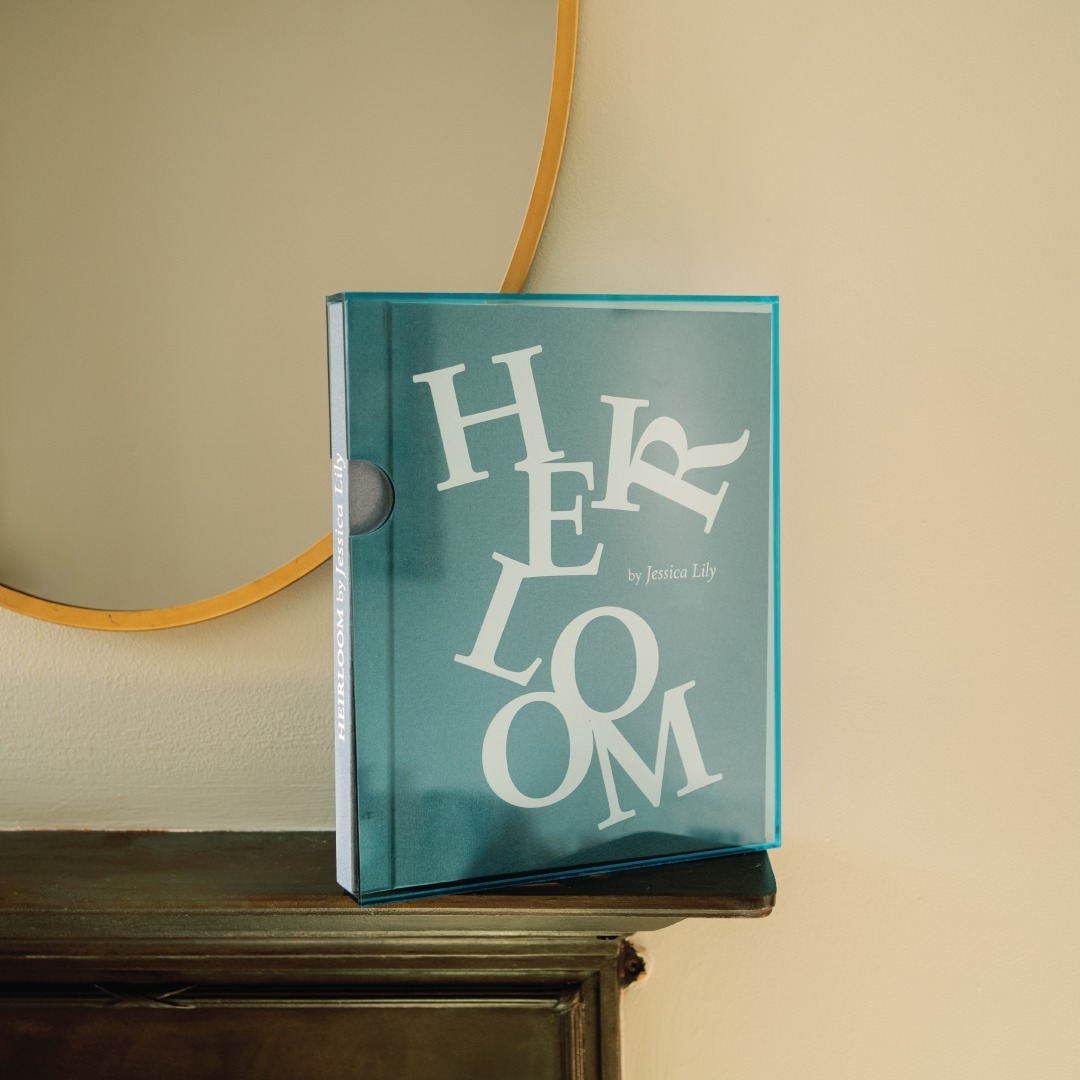
Deliverables are often the final chapter of the client experience, and they say a lot about how much care and intention the photographer puts into their work. When something is thoughtfully designed – the curation, the layout, the materials, the presentation – it communicates artistry, not just service. It tells the client: ‘This wasn’t just about taking photos. This was about telling your story with intention.’
An album is not just a collection of images – it’s a narrative. It’s selecting the moments that truly represent the essence of the day: the emotions, the relationships, the quiet in-between moments. And when clients see their story presented in that way, it elevates their entire perception of the work. It moves photography from being something functional to something meaningful and emotional.
In what ways can fully branded products help photographers strengthen their identity and long-term recognition?
Today, branding is everything. Your brand isn’t just your logo – it’s the entire emotional experience someone has when interacting with your work. Branded products extend your voice beyond the images themselves. They create consistency, recognition, and – most importantly – memory. When a client receives something that reflects your identity: your aesthetic, your tone, your philosophy – it reinforces who you are as an artist. It turns your work into a full-circle experience: from the first email, to the wedding day, to the final tangible piece they hold in their hands. That consistency builds trust, emotional connection, and long-term recognition – not just with the client, but with everyone who later sees that album or product in their home.
How does offering something meaningful and lasting allow photographers to grow their revenue without compromising their values?
People today are craving meaning more than ever. In a world that moves very fast and feels very digital, tangible products offer something slower, deeper, and more emotional. They allow photographers to increase the value of their work without needing to compromise their artistic integrity or take on more volume. Instead of working more, they work more intentionally. And when clients receive something meaningful – something that feels like a keepsake rather than just a file – it creates a deeper connection not only to the memories, but also to the photographer’s brand. It transforms the relationship from transactional to emotional. And that emotional connection is what creates sustainability, loyalty, and long-term growth.
07 RISE BY CREATIVES: EDUCATION WITH A MISSION
What inspired you to create Rise by Creatives?
Rise was born from a very personal place. When I was starting my career, I felt completely lost – overwhelmed, disconnected, and unsure of how to turn my passion into a real, sustainable life. I had a very deep desire to create, but I didn’t have guidance. I didn’t have a roadmap. And when I tried to find support, I often found closed doors. People weren’t open about their processes. There was a lot of gatekeeping. And that was very discouraging.
So at some point, I made a promise to myself: if I ever reached a place where I could truly make a living from photography, I wanted to create something different. I wanted to create a space where photographers wouldn’t feel alone – where information would be shared openly, where people could find clarity, support, and direction. Rise was created to give photographers what I wish I had when I started: guidance, honesty, and tools to build a life from their passion.
“Rise was created to give photographers what I wish I had when I started: guidance, honesty, and tools to build a life from their passion.”
What gap in the industry did you feel needed to be addressed?
There was a huge gap in education around building a real, sustainable business in the wedding photography world – especially in Latin America. Many photographers are incredibly talented, but they lacked tools related to pricing, client experience, branding, positioning, and long-term strategy. Rise was created to address that gap for Spanish-speaking creatives. It’s about helping photographers understand that this career can be sustainable, profitable, and fulfilling – if they have the right mindset, tools, and guidance. It’s not just about teaching photography. It’s about teaching how to build a life around it.
What kind of transformation should a photographer realistically expect after joining Rise by Creatives?
The biggest transformation we see is clarity. Over time, photographers gain confidence in their voice, direction in their business, and a stronger sense of purpose. They stop feeling lost and start feeling intentional – they learn to build sustainable careers, not just busy ones. And most importantly, they reconnect with the joy of creating, which is often what gets lost along the way.
What kind of change would you love to see in the photography industry over the next few years?
I would love to see more authenticity, more collaboration, and less comparison. More photographers supporting each other. More openness in sharing knowledge. More focus on quality over quantity. I think the industry would benefit enormously from moving away from constant trend-chasing and toward deeper personal expression.
We are proud to welcome Camila Urrea as a Fravero ProPhoto Ambassador. Her vision for photography as storytelling, legacy, and craft aligns deeply with our own commitment to helping photographers create work – and products that truly last.